Defining Digital Analytics
To begin, let’s start by defining “digital analytics” and why it’s important.
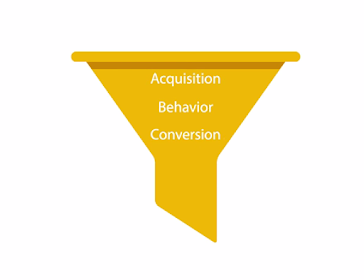
In marketing, we have the concept of a purchase funnel. There are different stages within the funnel that describe customer interactions. A basic purchase funnel includes the following steps:
- Acquisition involves building awareness and acquiring user interest
- Behavior is when users engage with your business
- Conversion is when a user becomes a customer and transacts with your business
In the offline world, this process can be hard to measure. But in the online world, we can measure many different aspects of the funnel using digital analytics. We can track what online behavior led to purchases and use that data to make informed decisions about how to reach new and existing customers.
Digital Analytics in Practice
Think about an online store, such as the Google Merchandise Store. It might have a goal to sell more t-shirts. Using digital analytics, the store could collect and analyze data from their online advertising campaigns to see which are most effective and expand those marketing efforts.
For example, the store could analyze geographical sales data to understand if people in certain places buy a lot of shirts and then run additional advertising campaigns in those areas. They could also use analytics to understand how users progress through their online shopping cart. If they notice that users have trouble with a particular step on their website, they can make changes to the site to resolve the problem.
Different kinds of businesses can benefit from digital analytics:
- Publishers can use it to create a loyal, highly-engaged audience and to better align on-site advertising with user interests.
- Ecommerce businesses can use digital analytics to understand customers’ online purchasing behavior and better market their products and services.
- Lead generation sites can collect user information for sales teams to connect with potential leads.
While we’ve primarily talked about collecting data from a website, Google Analytics can also collect behavioral data from a variety of systems such as mobile applications, online point-of-sales systems, video game consoles, customer relationship management systems, or other internet-connected platforms.
That’s right. This data is compiled into Analytics reports, which you can use to perform in-depth analysis to better understand your customers and their purchase journey. Then you can test out new solutions to improve your business.
 Anthony Ku Ong